Esnna Code of Conduct
Commitment to the Protection of Children and Adolescents
In accordance with Law No. 28251, the Ministry of Foreign Trade and Tourism (MINCETUR) has established a policy against the sexual exploitation of children and adolescents (ESNNA). In this regard, Tawa Roads has signed an agreement to take joint actions with the ESNNA Code of Conduct to prevent and eradicate this serious issue. Therefore, we declare the following:
We strongly reject the sexual exploitation of children and adolescents (ESNNA) both in Peru and globally, particularly in relation to the travel and tourism industry, as such conduct violates the fundamental rights of individuals and contradicts the core objectives of tourism in our country.
We denounce and condemn those who exploit the tourism industry, its facilities, and services to promote, facilitate, or tolerate the sexual exploitation of children and adolescents. In light of the above, Tawa Roads subscribes to the Code of Conduct against the sexual exploitation of children and adolescents in the context of tourism.
This Code represents a formal declaration of voluntary adherence, with the aim of establishing ethical conduct guidelines for all of us at Tawa Roads, focused on protecting children and adolescents from any form of sexual exploitation and human trafficking related to travel and tourism.
Furthermore, we, the members of Tawa Roads, commit to taking all necessary measures to protect children and adolescents from sexual exploitation and trafficking. Specifically, we pledge to:
- Maintain an ethical policy that rejects the commercial sexual exploitation of children and adolescents in the context of travel and tourism.
- Inform and train all staff on the company’s policies regarding the prevention of sexual exploitation of children and adolescents in tourism and travel.
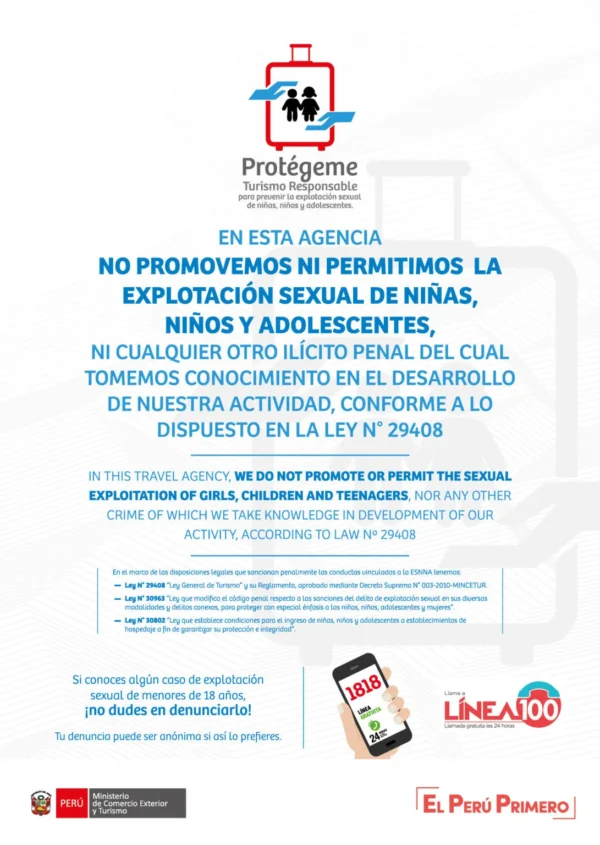
- Display visible symbols to alert customers and suppliers about our stance on the sexual exploitation of children and adolescents in the travel and tourism industry.
- Include a clause in all contracts with tourism service providers that clearly rejects any form of sexual exploitation of children and adolescents, using the following statement:
“Tourism promotes a childhood and adolescence free from sexual exploitation; therefore, we do not accept any act that facilitates the sexual exploitation of children and adolescents.”